


WhiteFall
An immersive VR narrative game based on a frozen alien world that received the accolade of finalist in the Immersive Media category of the Rookies 2022. I was the game's lead level designer working with artists and programmes to bring the game world to life. I wore many hats during development helping to fill skill gaps in areas such as programming, VFX, and systems implementation as needed.
My Contributions
-
Lead level designer: I designed and white-boxed the majority of the game's levels using a playtest-informed iterative method.
-
Feature Teams: I worked directly with artists and programmers as part of a feature team to bring the level designs to life.
-
Technical Assistance: I used my years of Unity experience to assist with Unity operations and lead many troubleshooting efforts.
-
System Integrator: Worked with programmers on the system integration step and learned FMod to help our composer implement the music.
Project Overview
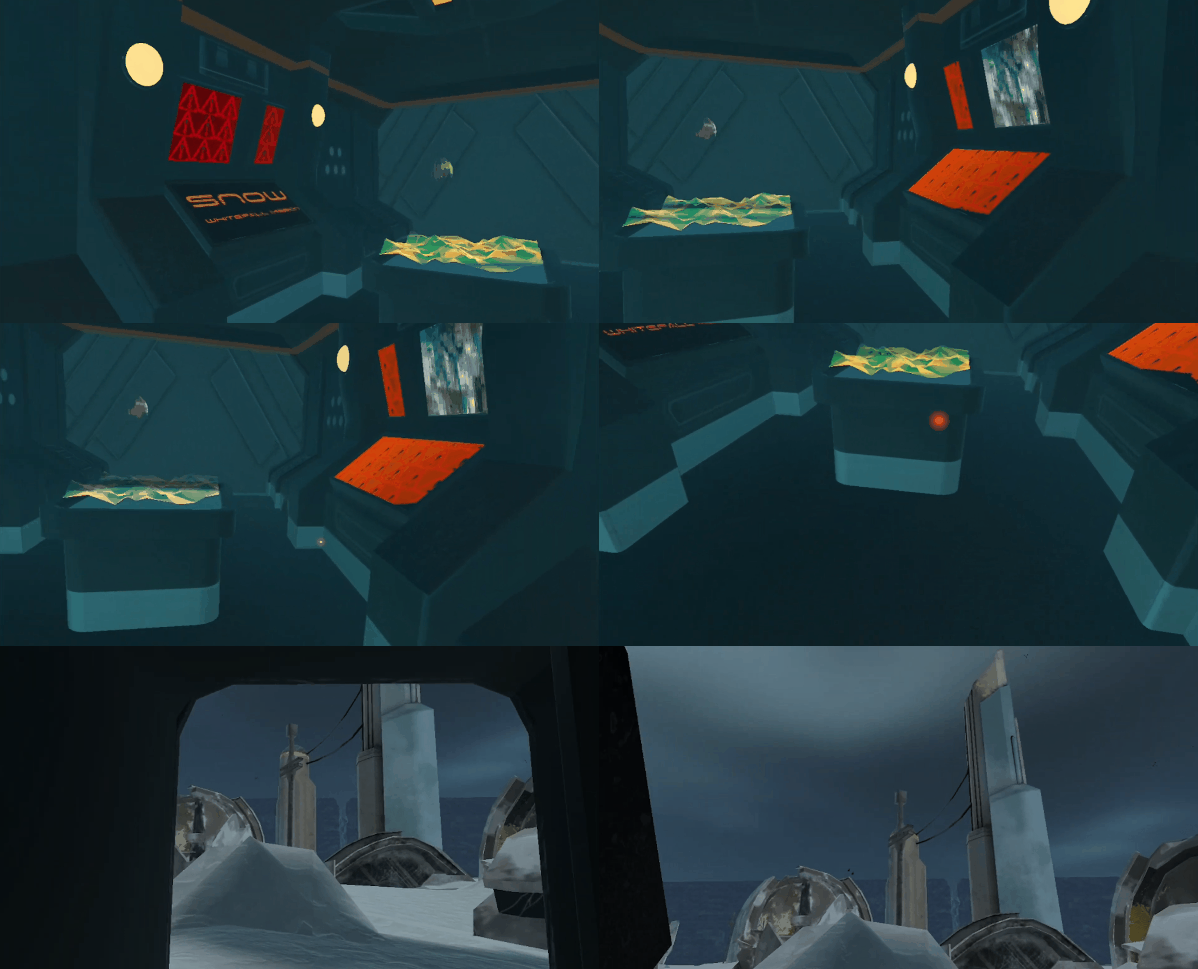
Explore an immersive frozen world in VR discovering the remnants of an abandoned colony while trying to keep warm in a hostile environment.
Narrative exploration
WhiteFall immerses players through exploration and visual storytelling. Players discover clues as to what happened to the former inhabitants of this once populated place.
Hash condition survival
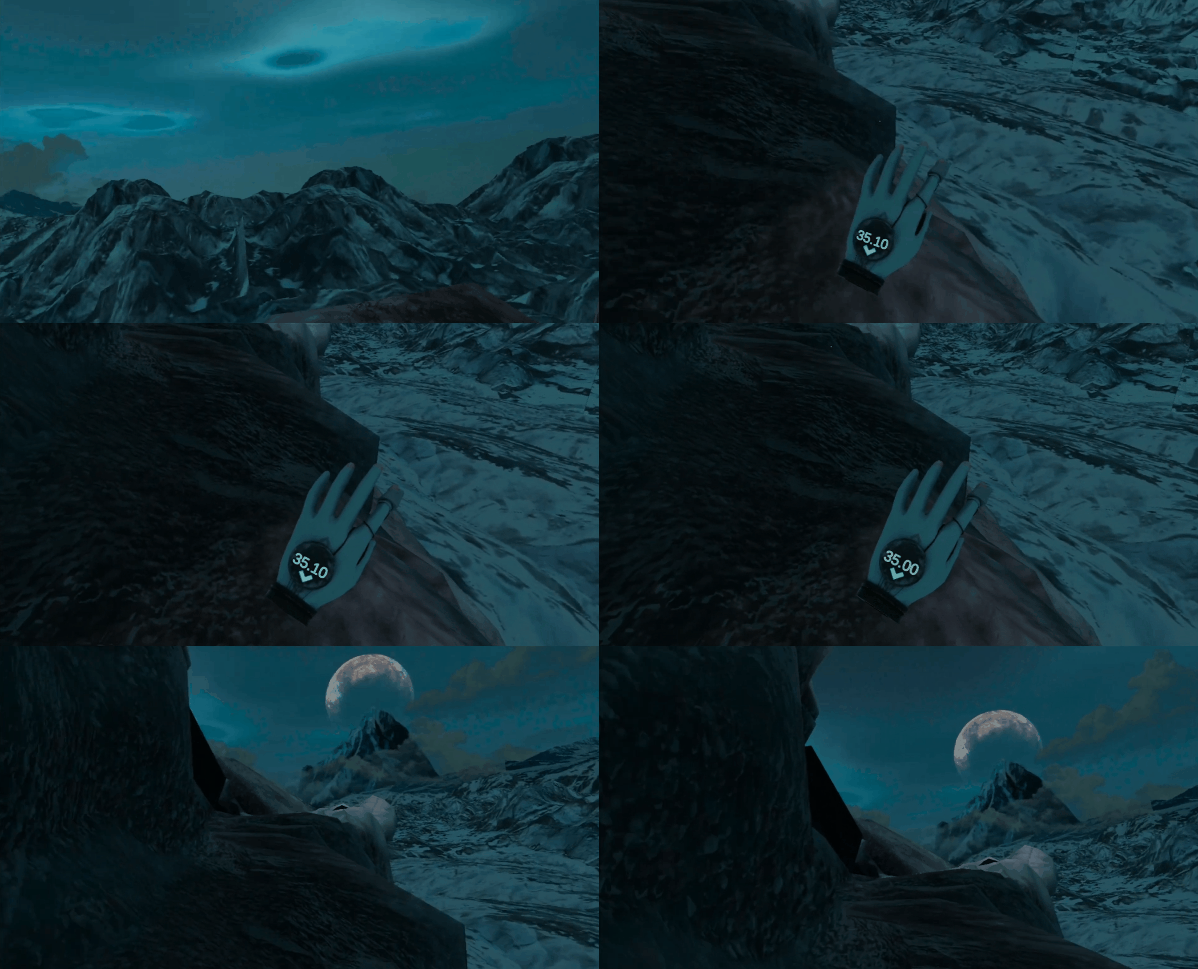
The game keeps the player centred in the moment through a temperature system. Players must move from warm spots to warm spots to survive. Pacing the players exploration.

Challenges of working in VR
Working in VR presented a multitude of unique challenges inherent to the highly immersive medium. Playtesting revealed unexpected issues such as players getting lost, scale discrepancies between the player and the world, and most interestingly players repeatedly attempting to interact with non-interactable objects.
Player world interaction
During playtesting players would repeatedly attempt to interact with level elements and objects that were not meant to be interactable. Such as attempting to pick up static items. This likely happened due to VR's highly immersive nature causing players to interact with the virtual world like they would the real world. The solution to this was simply to allow these items to be interacted with, rather than needlessly restricting what they could or couldn't pick up which could break immersive.
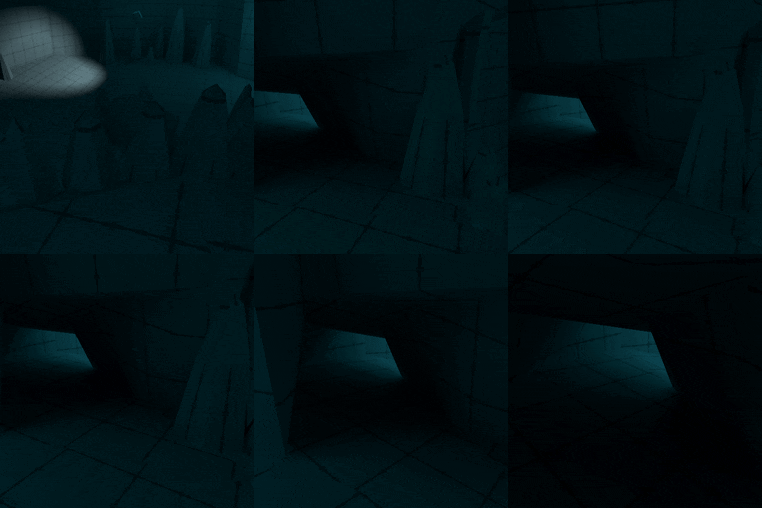
Observing playtesters in the real world revealed another interaction problem, players would simply stand still in one place. They were never encouraged to move their bodies within the virtual world. It was as if they were playing a traditional first-person game with a heavy screen strapped to their face. To solve this, small crawl spaces were implemented to force players to crouch to progress. This ontop of the interactable items scattered around made for a more interactive experience taking better advantage of the unique platform.
Navigating
VR's highly immersive nature makes the problem of guiding the player's eye especially challenging. The way players look around their environment differs between using a mouse or a joystick versus their actual head. Players in VR are much more likely to actively look around at their surroundings versus a traditional first-person game where they usually only look where they are going. This gives players more opportunity to miss environmental cues used to guide them down the right path.
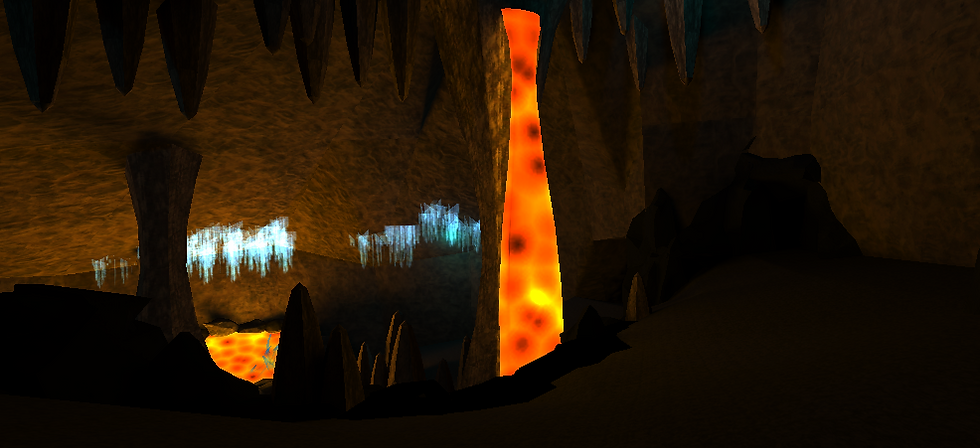
Increasing the number of environmental cues did a lot to ensure the players had plenty of chances to see the correct path. Among these environment cues, one of particular interest was changing the cave level (easily the most labyrinthian) to have a near-constant downward slope as a way of offering a path of least resistance to the player. Increasing the chance they would choose the correct path over backtracking. This paired with the other environmental cues proved to be highly effective.
Example of Crawl Space

Early flat cave iteration

Final Sloped down iteration


Cave Design
The cave level went through the most iterations while working on this game. Largely owing to the unique challenges of VR development. Playtesting repeatedly revealed new problems that needed to be solved, from guiding the player to taking full advantage of VRs immersive nature.
VR Intractability
The original version of the game didn't take full advantage of VR playing closer to a normal 3D game level rather than an immersive VR experience. Play testers would often express this feedback so I redesigned the cave to include crawl spaces that forced players to duck down adding to the immersion helping players feel more spatially present within the game world.
First Iteration
Final Iteration